Phillips
Phillips
At Ealing September 2009, I picked up a LH drive Phillips intermittent sprocket 16mm machine. I have played with one of these at the PPT when they were in Bletchley Park; it has the distinction of being the only machine I have yet met where threading is non-intuitive and just has to be known. This is because it has an arrangement whereby the gate is opened along with the film path by a single lever and, once threaded, closing up the lever makes the loops.
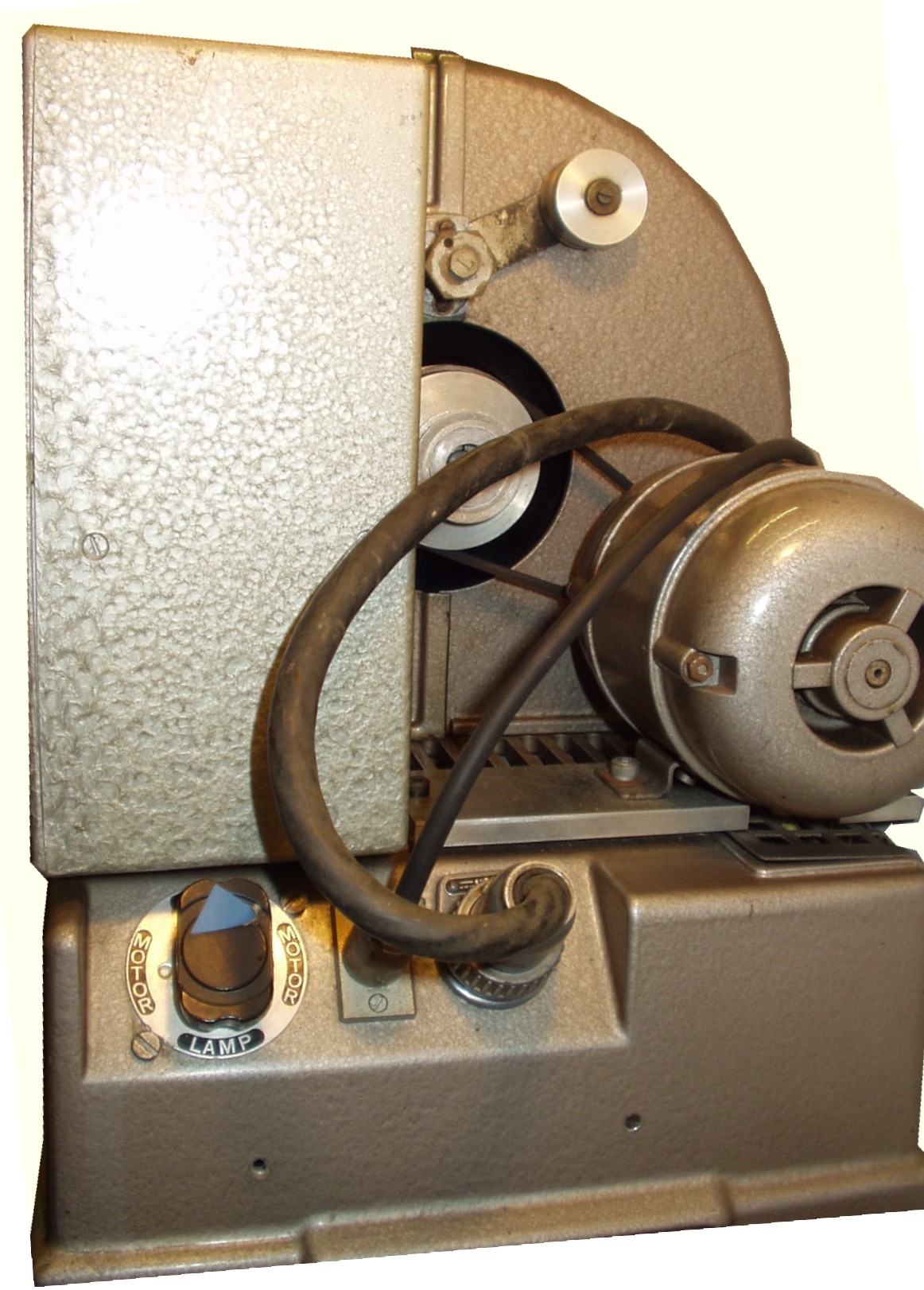
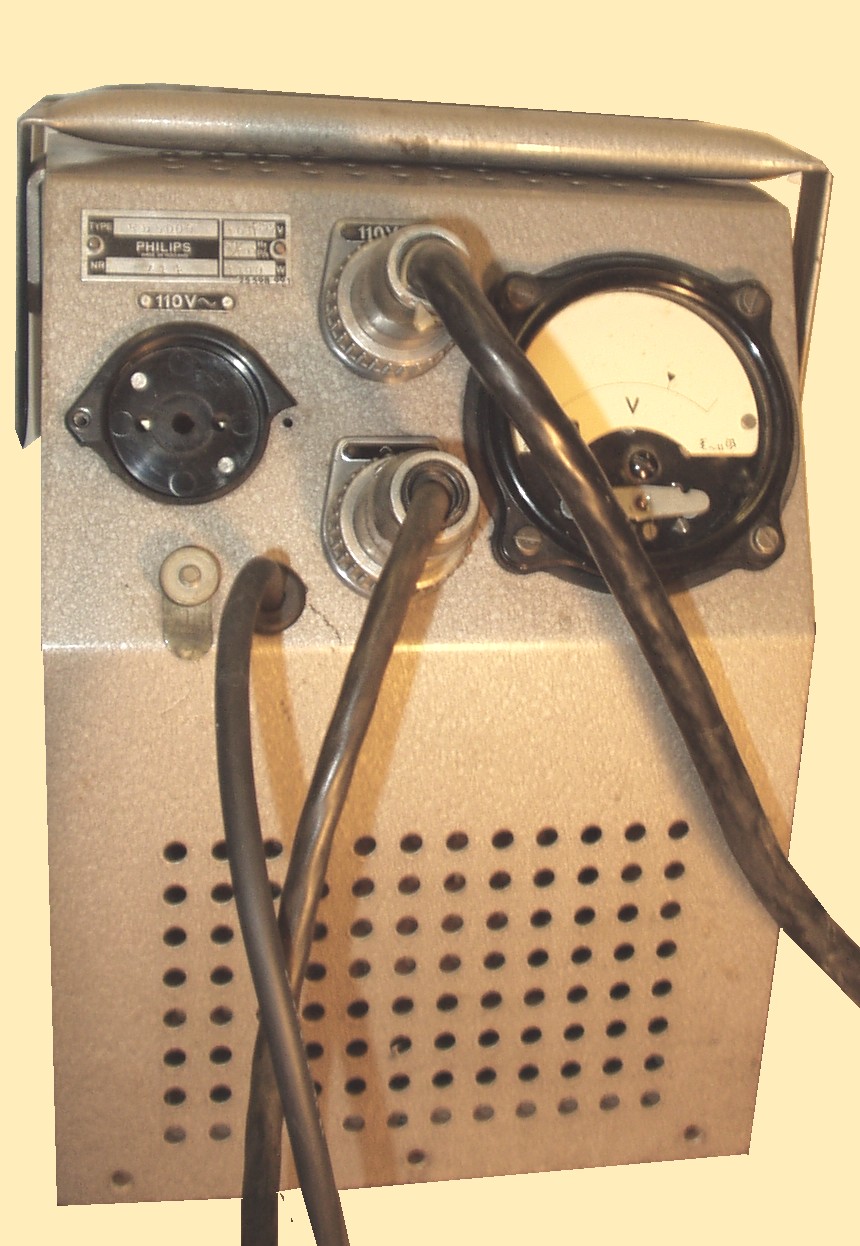

This machine has obviously had a lot done to it electrically/electronically. From the rear view, it appears that there was at one time an even bigger motor, and possibly a different lamphouse. The tranny, about the biggest and heaviest I have seen, may well have been designed to power a 110v 1200w incandescent lamp. The amp has disappeared, and in its place are most of the electrics of an Elf - tranny and amp, including the power for the 24v 250w lamp now fitted.. The fixed wire emerging from the left of the external tranny is actually a mains feed (off the back of the mains input socket to the tranny) to the Elf bits. So it appears that all that huge tranny is doing is supplying 110v to the motor. Overkill, perhaps? The empty socket on the left of the big tranny may have been a separate feed to the original amp - there is a matching affair on the rear of the machine base. The LH input on the rear of the proj (now the mains feed to the Elf stuff) may have been an amp output. Trouble is, all this is speculation, as I have no documentation at all - anything would be welcome.
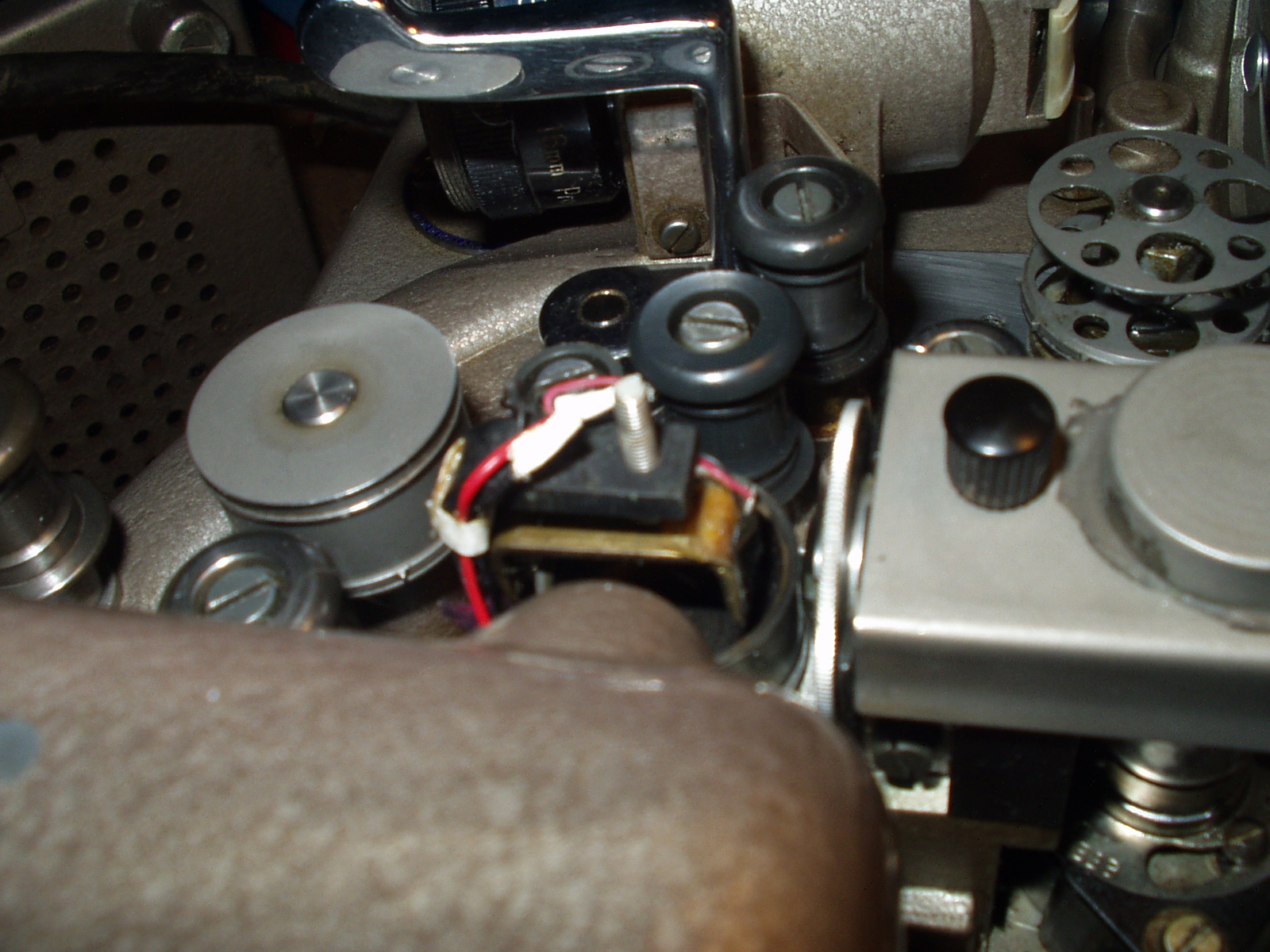
I don't know why it seems to be a point of pride with so many that all projectors should be as dirty and unkempt as possible, combining both under and over-oiling in a single neat package, tho' to be fair this has an oil bath, which are notoriously leaky things. It may be in the course of my extensive cleaning that the cell seen in the final pic got damaged, or it may already have been busted - hard to say. The corner with the output leads is cracked almost off, so I shall have to replace. Incidentally, the insulation of the original cable used for the mains feed from the tranny to the Elf parts was rotten and just crumbling off where it was connected, inside the tranny casing. It was an absolute b******* to get inside and work on to replace it. Having got the Phillips back into some sort of working order, I still have a long list of things to do but, as I am unlikely to use it extensively in the near future, it'll have to go on the back burner for a bit. What I still need to do includes:-
- Replacing the big tranny, which is really doing very little work. The motor is probably a bit too big to use the Elf tranny in auto-transformer mode for the 110v, but it should be possible to fit a small tranny inside the base. Fair bit involved in fitting and re-wiring, and then of course I have to go back inside the tranny and uncouple
that mains feed, and maybe fit sensible plugs so I can use it as a general power source.
- The top arm isn't right- tighten up the screw and it seizes up, then works loose as you move it- needs the correct thickness of washer, maybe.
- I ent got the solar cell fitment quite right - that black cover is fouling the flywheel. I am not clear what to do - open out the slot covering the cell, which is where I think the problem lies, use shims where the bracket is fixed or just trim off the bits that foul the flywheel.
- The motor takes its time starting, with a second or two of slow build-up to speed. Maybe capacitor is tired?
- I'm not satisfied with the volume of the sound. The change of cell is one obvious cause, so I might even have to try another, tho' I have fitted an Elf one. It also seems
to me that the exciter is a bit dim - there may be a way to crank this up. Position of the cell might be off.
- I noticed when framing the test film I used that the machine went very clattery before I reached the right place, so much so that I backed off. No idea why this is, or if it's the film rather than the projector.
-The rear gate is a very flimsy chromed affair and damp storage has caused rust. This needs to be carefully checked with a test loop to ensure it's not scratching.
I include all this partly as a memo to self (I am increasingly finding that even I use my website as a first port of call for info!) but also to show you just what may be involved in repairing/ restoring a projector. Any one of the above could take hours to sort, even if they are as I have imagined - if I'm wrong, who knows? And what have I missed? Make a note; do not complain about the cost of repairs to a projector as and when you have the need - whatever you are charged is likely to fall well short of what would be a realistic market rate. I won't do repairs for others by and large - what happens if it goes wrong? It would no doubt cost me more than I could hope to earn. Think what you would want to get as an hourly rate, and be thankful if you can find anyone to do cine repairs at all!
I was using a soldering iron with built-in temperature control. Quite by chance, I found it was the cause of a loud buzz from the amp when switched on. Yet another thing to watch out for.