A Bolex DA Power Pack (Autumn 2014)
A fair bit of my time has been spent on a lamp conversion for a Bolex DA and putting together a power pack for same, with switches to overcome the tiresome lamp-and-motor-on-as-soon-as-power-on thing. One of the factors here is that, for UK mains, transformers are needed for both the 110v for the motor and whatever the lamp is, in this case 15v 150w dichroic. In my experience, this lamp is about as bright as one can use without damaging the notched titles and still frames, even with the Bolex heat filter. On my machine, I actually had to "de-focus" it a bit to prevent heat damage.
Mikael Barnard found on-line a switched mode power supply that gave 15v 10a (DC, not that it matters) that he wanted me to use to power his new lamp. I noticed that this unit was in fact dual voltage and would work on 240v and 110v. I therefore decided to try out a 110v power pack which would serve for lamp and motor in a fairly compact unit. This approach does, however, need a separate 110v supply of which, of course, those of us who mess about with old projectors have more than enough.
Anyway, a picture is worth a thousand words so here are many words of explanation.
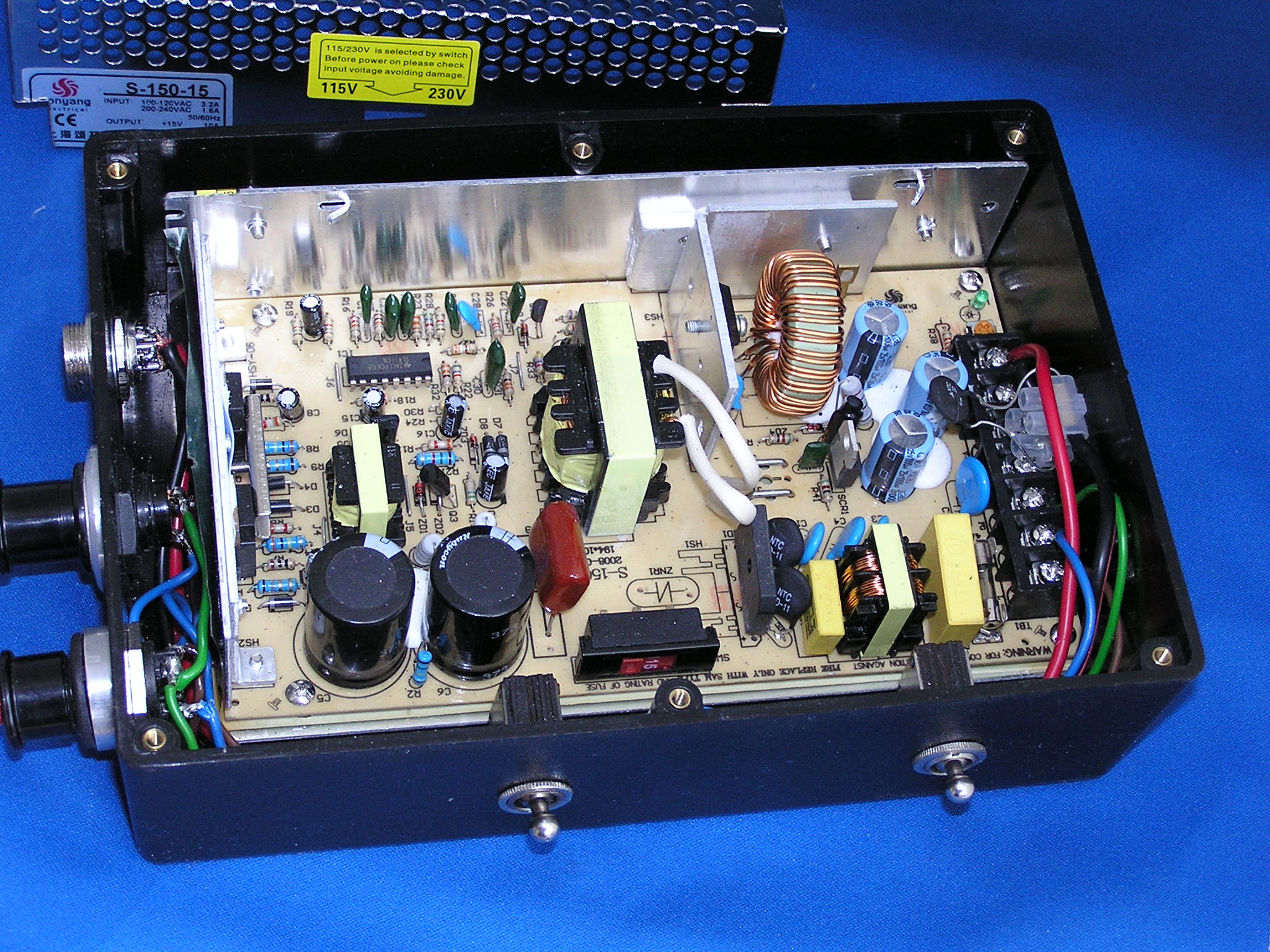
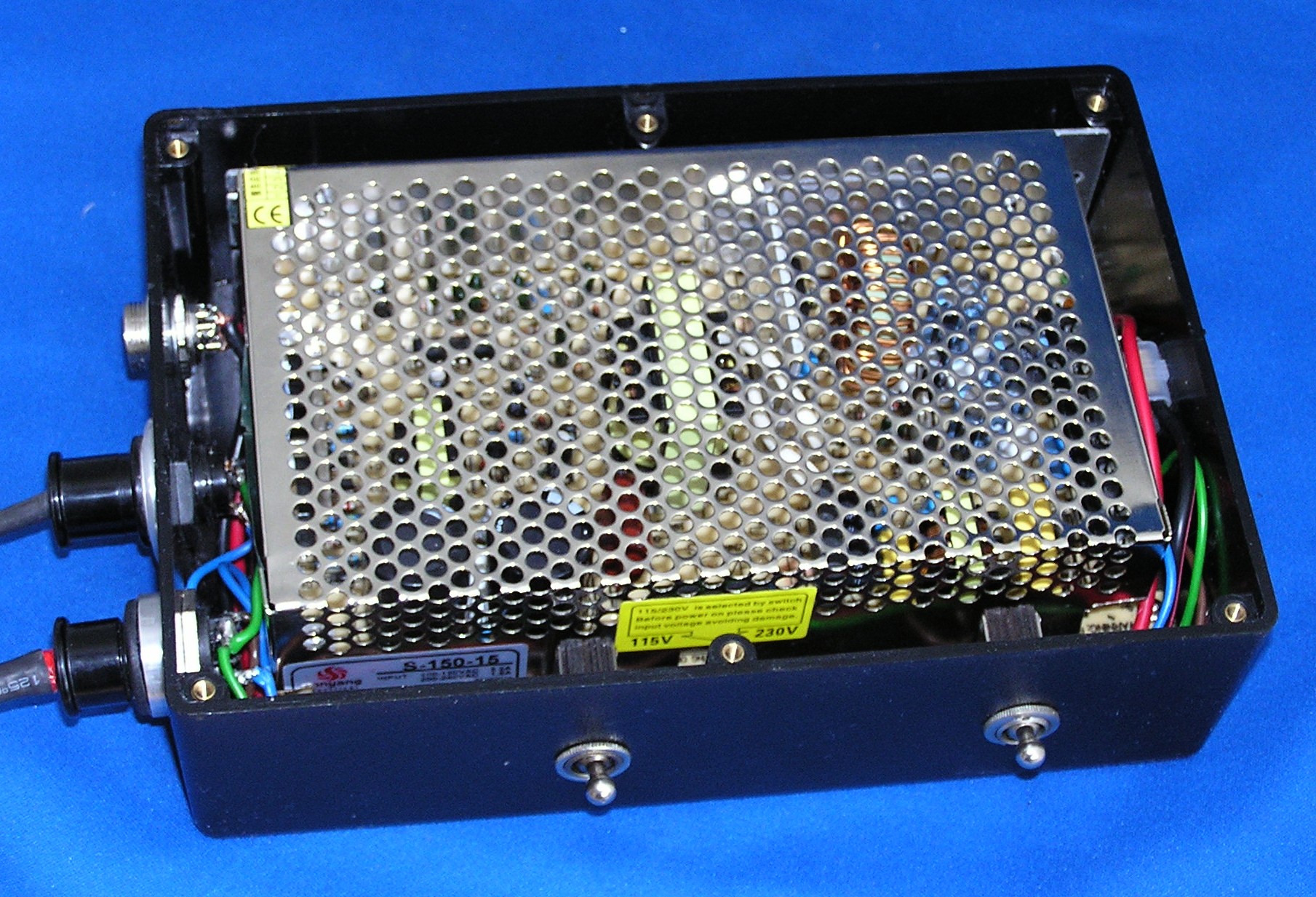
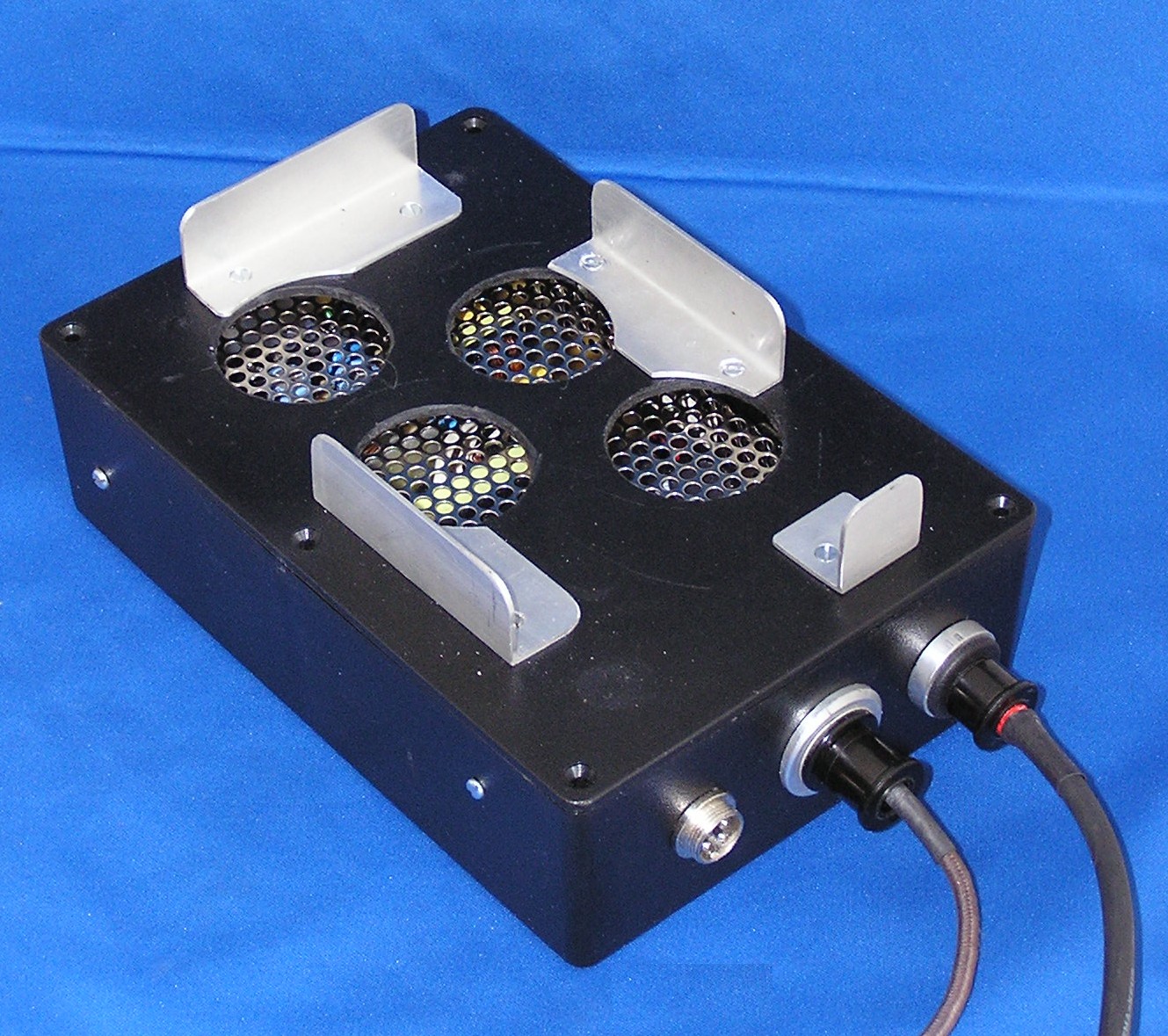

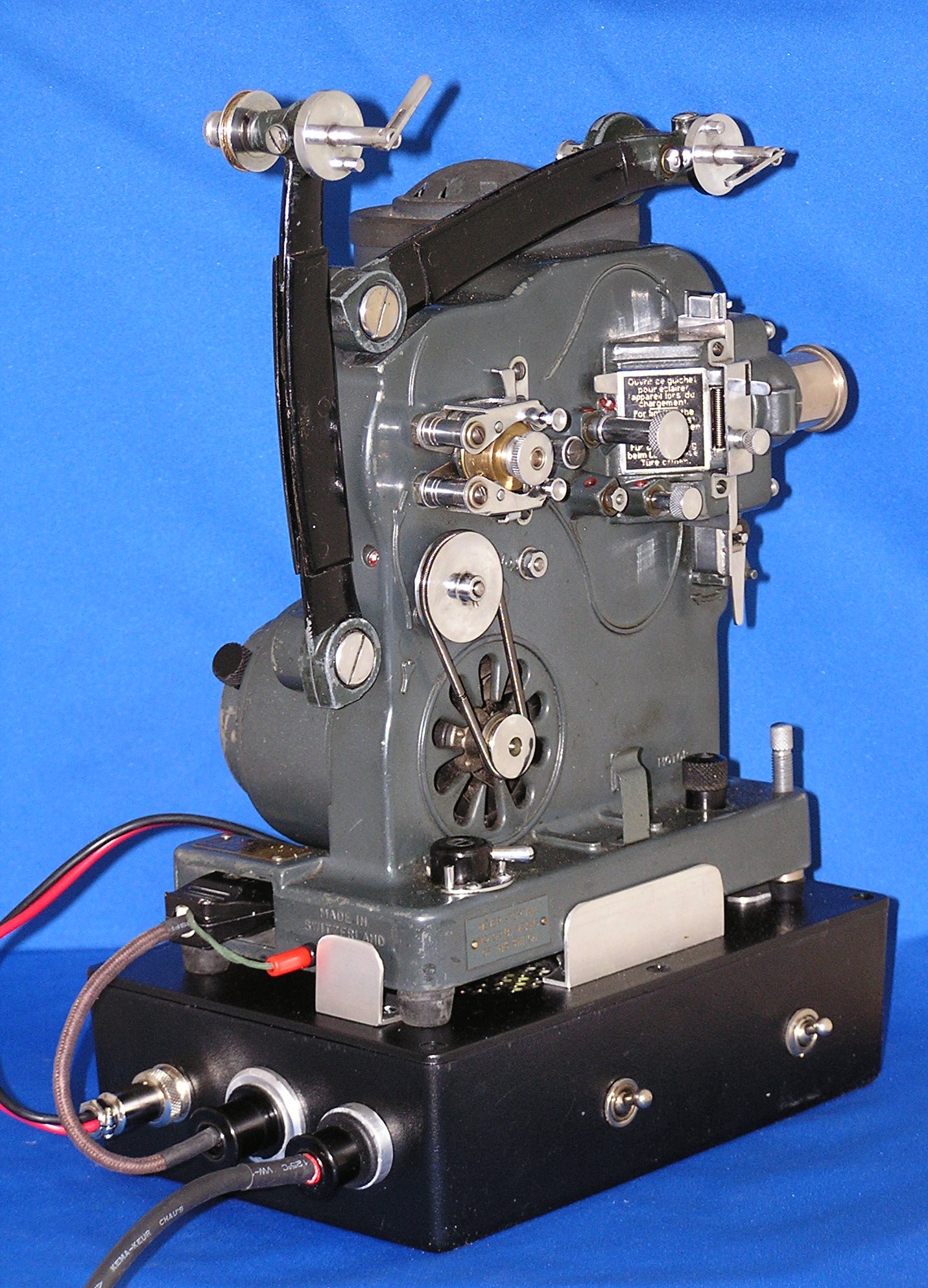

I basically used what I had to hand - the box, various sockets and switches etc. It was a bit of a squeeze getting the power supply into the box, and you will note that even with quite small sockets, I had to use big washers on the outside to leave enough space inside (I did fix some insulation to the end of the power supply by the sockets). As an aside, I did a rough guesstimated costing of the various components used. Even without the power supply (another 15), the total was over 40 at a conservative estimate; a sobering thought. One of the minor costs was a plug and socket to provide an earth - I don't like projectors, even 110v, without an earth. Reading from left to right, the sockets are lamp out, 110v and earth out and 110v in. (The switches are, of course, interlocked so lamp cannot be on without motor, tho' if you have the volume turned down too low on the motor, it may not run even tho' switched on. This matters less for film than for the effect on the motor and the loss of cooling to the lamp. The motor volume control on the Bolex is a sensitive little beast; very little travel lies between overspeed and stop.) I cheated a bit with the connection to the lamp; instead to trying to run a connection thru the body of the machine, maybe making more holes for a socket, I just fitted a bit of plastic connector strip beneath the lamphouse - see last pic.
Anyway, to return; the power unit had a well-ventilated cover, so I felt obliged to make some holes in the top of the box. The perforated cover itself would have been tricky to re-fit, so it just sits in the box on top of the power supply - it hasn't got anywhere it can go. I had always envisaged the power pack as detachable, so the projector was not altered to fit or fixed down in any way. To give extra stability so the machine wouldn't slide off the box, I made some retainers. They had to be reasonably tall because of the projector feet (which of course were virtually useless and had to be replaced) and also the height adjustment at the front, and anyway, that was the size of aluminium angle I happened to have. They are sized to fit the space available - the front one just fits between the front feet.
One peculiar thing had me foxed. the power supply didn't work. Fortunately, Mikael's PPT colleagues had met and overcome this problem. At the right hand end of pic 1, you can see a bit of plastic connecting strip, with what looks like a disc capacitor wired across it. This had to be retro-fitted and is directly in circuit with the negative side (remember, we are talking DC here), tho' I do not know if this is critical or if the pos side would work too. It is in fact a thermistor, in this case one of 20 ohms, tho' the significance of that I do not know. It is a device, I am told, that provides a high resistance to current at first, reducing as it warms up from the current that flows thru. It seems the power supply balks at taking all 10 amps all at once and has to be broken in gently. Anyway, it works so let us not knock it. There is, however, a brief delay between turning on the switch and light appearing.
---------------------------------------------------------------
Going back to my power pack for a Bolex DA. I left the story where I had had, on advice, fitted a thermistor to make the switched-mode power supply work. Now, in accordance with my usual practice, I had wired things so that the lamp switch turned the mains supply to the power pack on and off, rather than switching the much higher lamp current. However, the thermistor had to go into the circuit between the power pack and the lamp, and (you are probably way ahead of me here) the thermistor did not like it and got very hot and tried to melt stuff. Even 3 in parallel couldn't hack it. I had also somewhat misunderstood what I had been told. It appears the issue is that the power pack needs at least some resistance to its output before it will fire up, but a cold lamp has little or none. The solution was to use a centre-off DPDT switch which in one "on" position had the thermistors in circuit, whilst in the other they were cut out of the circuit. Just a couple of seconds in the first position is enough to fire it up without giving the thermistors time to overheat before they are switched out of circuit. Once the lamp is at all warm, the thermistors are not needed at all and one can go direct to the second, "run" position. This means the momentary "off" is not a problem in switching from "start" to "run".
What one really needs, of course, is a good old-fashioned switch that does Off-On-On like one used to find on some projectors. It seems today no such thing can be found - internet just gives me centre-off, even when it claims it's what I want. If anyone has a source, please let me know.
------------------------------------
Bolex Tranny (July 2014)
I am struggling with a Bolex DA. I have a Bolex tranny, that is the size and shape of the normal resistance but weighs a ton. When I connect the two together, I connect, as always an earth, that runs from the projector to the tranny to the mains earth. The problem is that when I switch on, the auto cut-off at the mains trips out. This also happens with other transformers, though, interestingly, not every time. Running the projector without an earth, with its own tranny, the body of the projector registers live with my mains tester screwdriver, which glows red; I measured 126 volts from the machine to the tranny earth (I hope it is nearer 110v under load!). The tranny does not do this, so presumably the problem is with the projector. I have checked all the usual suspects, the brushes, the resistance, the input wires, the reversing switch and removed the lamp so it ent that. I even took the motor out, not a thing I have ever done before, and replaced some bits of wire with rotted insulation, but I have found zilch.
Interestingly, taking the motor out revealed this machine to be one with the larger motor and fan designed to take a 400w lamp, but it is not the 1937 model with the bigger shutter and the curved top to the main body of the mech. The additional fan-power takes the form of a second set of blades on the same shaft, with a sort of collar between the motor and the mech. This collar is about 2cm deep, standing the motor off from the mech body, and surrounds the outer fan except where air needs to flow to the lamphouse. Seems quite a neat adaptation to me. The inner fan is presumably the same as ever it was.
Getting the motor back in was a bugger. The hole the (four) motor wires have to pass thru is immediately below the motor, and I found it impossible to fiddle the motor and ran and collar back into place. In the end, I had to resort to brute strength and ignorance, and took a file to the hole and made it much bigger. I'm not proud of it, but it ent really visible.
But the original problem is still there.